
Lip filler treatment is designed to refine the shape and appearance of the lips. However, the immediate result is not always the final result. Lip filler swelling and bruising can occur after treatment, and the lips may look fuller or feel uneven while they recover.
At POUTx, the HydratedNOTinflated™ approach focuses on a soft, hydrated appearance while respecting the natural shape of the lips. The clinic's published aftercare guidance explains that lip filler recovery takes approximately two weeks, with changes in swelling, bruising, and texture during this period.
Understanding this timeline can help you know what to expect after your appointment and why the initial appearance of your lips may differ from the settled result.
Why Does Lip Filler Swelling Occur?
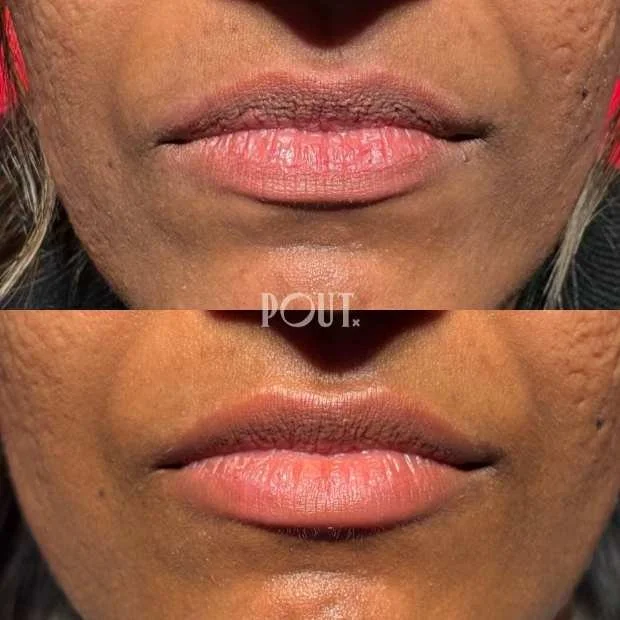
The lips are highly vascular, and lip filler treatment involves multiple injection points. According to POUTx's aftercare guidance, this can cause tissue trauma, resulting in swelling after treatment.
Bruising may also appear as the lips recover. These changes can make the lips look different from the result you expected immediately after your appointment.
POUTx explains that the lips can appear more swollen on the day after treatment than they did immediately following the procedure. This is why it is important to understand the recovery process rather than judging the final appearance too early.
The clinic's HydratedNOTinflated™ method is centred on refining natural lip shape and hydration instead of pursuing unnecessary volume. The recovery period is part of allowing the treated lips to settle.
Lip Filler Recovery Timeline: What to Expect
POUTx outlines a two-week recovery period for its HydratedNOTinflated™ lip treatment. The following timeline summarises the stages described in its published post-care guidance.
Immediately After Treatment
Immediately after lip filler treatment, noticeable swelling is expected. The lips have undergone multiple injections, and the surrounding tissue responds to the procedure.
At this stage, the lips may look significantly fuller than anticipated. POUTx advises clients to keep the treated area clean and avoid makeup on the lips for the remainder of the day.
It is also important not to touch, rub, or massage the treated area during the initial recovery period.
Days 2–3: Swelling and Bruising May Increase
The day after treatment, the lips may appear more swollen than they did on the first day. Bruising may also begin to develop.
POUTx identifies this as a normal part of the lip recovery timeline. Its aftercare instructions recommend continuing to cool the area with an ice pack to help reduce swelling.
The clinic also advises avoiding strenuous activity, extreme heat, and alcohol for two to three days after treatment.
Days 4–5: The Lips May Still Look Uneven
During days four and five, the lips may remain swollen or bruised. POUTx notes that the lips may also feel lumpy or bumpy during this stage.
These temporary changes can make it difficult to assess the final shape of the lips. The clinic's guidance explains that the appearance should begin improving as the recovery process continues.
Rather than making assumptions about the final result based on this early stage, follow the aftercare instructions provided by your treating practitioner.
Days 5–10: Swelling Begins to Reduce
Between days five and ten, POUTx states that swelling reduces significantly and the lip filler begins to soften.
As the lips continue to recover, their appearance can become more refined. This is part of the gradual process described in the clinic's HydratedNOTinflated™ aftercare guidance.
The recovery timeline can help explain why the lips may look different from one day to the next. The initial appearance should not be treated as the final outcome.
Day 14: Follow-Up Appointment
POUTx requires a follow-up appointment at the two-week mark for its HydratedNOTinflated™ lip treatment. This appointment allows the clinic to review the result and make adjustments when appropriate.
The two-week review is an important part of the treatment approach because the lips need time to recover before the result is assessed.
Lip Recovery Tips: Following POUTx Aftercare Guidance
Following the published instructions can help you understand how to care for your lips after treatment. POUTx provides the following guidance for HydratedNOTinflated™ lip filler recovery.
Keep the Treated Area Clean
POUTx advises keeping the treated area clean and avoiding makeup on the lips for the remainder of the treatment day.
Avoid Touching, Rubbing, or Massaging
Do not touch, rub, or massage the treated area during the aftercare period unless your treating practitioner specifically instructs you otherwise.
Use an Ice Pack to Cool the Area
POUTx recommends ongoing cooling with an ice pack to help reduce swelling. Follow the clinic's instructions for your treatment and ask your practitioner if you are unsure how to apply this guidance.
Temporarily Avoid Strenuous Activity
The clinic advises avoiding strenuous activity for two to three days after lip filler treatment.
Avoid Extreme Heat
POUTx recommends avoiding extreme heat, including sun exposure, tanning beds, and saunas, for two to three days following treatment.
Avoid Alcohol During the Initial Recovery Period
POUTx's published lip aftercare instructions recommend avoiding alcohol for two to three days after treatment.
These recommendations are based on POUTx's published post-care guidance. Follow the instructions provided for your own appointment, and contact your treating practitioner if you have questions about your recovery.
Every lip filler journey includes a recovery period, and understanding aftercare can help you feel more informed. Explore POUTx's article on Post-Filler Aftercare: What to Do (and What to Avoid).
When Should You Contact POUTx During Lip Filler Recovery?
Swelling, bruising, and feeling the filler are described as normal parts of the recovery process in POUTx's published guidance. However, the clinic also identifies specific symptoms that should not be ignored.
POUTx warns that a blocked vessel is extremely rare but requires immediate attention. Its guidance identifies sharp, high-level pain accompanied by skin discolouration, blanching, or mottling as warning signs.
If these symptoms occur, POUTx instructs clients not to wait to see whether they improve. Contact the clinic immediately through its published contact channels and follow the instructions provided by the treating team.
If something about your recovery concerns you, contact the practitioner who treated you rather than relying on assumptions or comparing your experience with someone else's.
How POUTx's HydratedNOTinflated™ Approach Shapes Lip Treatment
At POUTx, lip filler treatment follows the HydratedNOTinflated™ philosophy. The aim is a hydrated appearance and refined natural shape, rather than adding unnecessary volume.
The clinic's method includes a comprehensive lip assessment to determine the appropriate amount of filler. POUTx also states that it never uses a full syringe in a single sitting as part of its signature lip treatment approach.
Final adjustments are made at the two-week mark, following the recovery period. This allows the clinic to assess the result after the initial swelling and other temporary changes have had time to settle.
The approach reflects POUTx's focus on maintaining natural-looking results rather than rushing the process or adding more filler without considering the existing shape.
Want to know more about POUTx? Connect with the clinic through its Google Business Profile and take the next step towards exploring treatments that align with your aesthetic goals.
Book a Lip Filler Consultation at POUTx in Toronto
If you are considering lip filler or want to learn more about the HydratedNOTinflated™ approach, POUTx offers consultations to discuss your treatment and the clinic's approach to lip assessment and aftercare.
Book your consultation with POUTx to discuss your lip goals, understand the treatment approach, and learn what to expect throughout the recovery process.
Frequently Asked Questions
1. Is lip filler swelling normal after treatment?
Yes. POUTx explains that swelling is expected after lip filler treatment because the lips undergo multiple injections and are highly vascular. Bruising may also occur during recovery.
2. When can lip filler swelling increase?
According to POUTx's aftercare guidance, the lips may look more swollen on days two to three than immediately after treatment. Swelling then begins to reduce as recovery progresses.
3. How long is the lip filler recovery period at POUTx?
POUTx describes a two-week recovery period for its HydratedNOTinflated™ lip treatment. The clinic schedules a follow-up appointment at the two-week mark to review the result and make adjustments when appropriate.
4. Is bruising after filler normal?
POUTx states that bruising may begin to appear around days two to three. Bruising can remain visible during the following days as the lips continue to recover.
5. What should I avoid after lip filler treatment?
POUTx advises avoiding touching, rubbing, or massaging the lips, strenuous activity for two to three days, extreme heat for two to three days, and alcohol for two to three days. The clinic also recommends keeping the area clean and avoiding makeup on the treated area for the remainder of the treatment day.
6. When should I contact POUTx after lip filler?
Contact POUTx if you have concerns about your recovery. The clinic specifically advises immediate attention if you experience sharp, high-level pain with skin discolouration, blanching, or mottling. Do not wait to see whether these symptoms improve.
7. Why does POUTx schedule a two-week lip filler checkup?
POUTx's HydratedNOTinflated™ approach includes a mandatory two-week checkup. This gives the clinic an opportunity to assess the result after the recovery period and make any necessary adjustments.