
Wrinkles vs Fine Lines: What’s the Real Difference?
Most people notice changes in their skin long before they understand what those changes actually are. One day it’s a faint crease beneath the eyes, and later it may become a deeper fold that sits more prominently across the forehead or mouth. These visible signs are a natural part of aging, but not all lines are the same. The terms wrinkles and fine lines are often used interchangeably, however they are not identical and understanding the difference can help guide the most effective and natural-looking approach to skin smoothing.
At Poutx, we believe in clarity, education and results that respect facial expression and individuality. This is why learning the difference between wrinkles vs fine lines matters. When you understand what you are treating, you can select solutions with intention rather than guesswork. Whether someone is beginning to notice subtle creases or seeing more pronounced folds develop with age, being informed allows them to approach rejuvenation confidently and realistically.
In this guide, we break down what separates fine lines from deeper wrinkles, how they evolve and where anti-wrinkle treatments, including botox for fine lines, may be most beneficial depending on the concern.
Why Understanding the Difference Matters
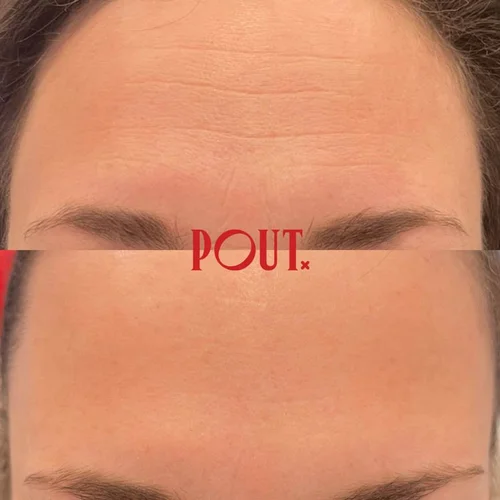
Skin aging is not a single event. It is gradual, structural, layered and influenced by numerous internal and external factors over time. Because of this, not all facial lines form in the same way and not all should be treated the same way. Choosing the right approach requires understanding what you are actually seeing.
Fine lines and wrinkles sit at different stages on that aging spectrum. They respond differently to preventative care, injectable treatment and topical support. When a client can recognize what type of change they are experiencing, they are better equipped to pursue tailored solutions that feel natural, balanced and age-appropriate rather than aggressive or premature.
What Are Fine Lines?
Fine lines are often the earliest visible sign of aging. They appear as subtle, shallow lines that usually form in areas of natural facial movement around the eyes, across the forehead, between the brows and near the mouth. Their appearance may come and go depending on expression, lighting and skin hydration.
Fine lines are associated with early changes in the skin’s texture. They are commonly linked to repetitive muscle motion, lifestyle habits and seasonal dryness, which is why they are often more noticeable when the skin lacks moisture or elasticity.
People frequently describe fine lines as creases that look like the beginning stage before deeper folds develop. Because they are still mild at this stage, many clients seek botox for fine lines to soften movement and maintain a naturally smooth appearance. Intervening early often gives the best long-term result because it slows progression rather than trying to reverse years of deeper structural change.
What Are Wrinkles?
When fine lines gradually deepen and settle more permanently into the skin, they become wrinkles. Wrinkles sit more prominently and remain noticeable even when the face is relaxed. They often develop over time as collagen levels decrease, skin resilience weakens and expression-related motion etches into the tissue more permanently.
Wrinkles represent a more advanced stage of aging compared to fine lines. They tend to be more visible around high-movement areas but can also appear in places where the skin naturally folds or loses supportive structure. The difference is not just depth but permanence. Wrinkles do not disappear when the face is at rest and usually require more targeted anti-wrinkle treatments for improvement.
While wrinkle softening is achievable, early awareness is always advantageous. Prevention, maintenance and realistic expectations all play a role in natural-looking outcomes.
Wrinkles vs Fine Lines: Key Distinctions
To simplify the comparison:
| Feature | Fine Lines | Wrinkles |
|---|---|---|
| Visibility | Light and shallow | Deeper and more defined |
| Movement | Often visible during expression | Visible even at rest |
| Development Stage | Early sign of aging | More advanced aging |
| Common Approach | Prevention and subtle softening | Targeted smoothing with clinical support |
When Anti-Wrinkle Treatments Become Helpful
Clients often begin considering anti-wrinkle treatments when their reflection shows changes they cannot address with topical care alone. Smoother skin becomes more difficult to maintain as expression-based creases take shape. While skincare supports texture and hydration, it cannot relax the repetitive motion that contributes to visible aging.
This is where injectables such as botox for fine lines may be used to help ease expression where it is most active. The goal is not to remove character or alter identity, but to reduce the intensity that causes deeper etching in the future. For wrinkles that are already set in place, softening remains possible, but expectations differ from early prevention.
Every face is unique, expression patterns vary, lifestyle habits differ, collagen declines at individual pace. This is why personalized recommendations matter more than generic assumptions.
Prevention vs Correction
Prevention aims to maintain smoothness. Correction aims to soften what already exists. Both are valid, both are personal and both can align beautifully with natural aging goals.
Fine lines typically respond best to preventive approaches, where muscle relaxation can slow progression. Wrinkles, being deeper, often require more intentional smoothing. Neither stage is superior; they simply reflect different points on the timeline of facial maturity.
Clients who understand this distinction are better prepared, more confident and more satisfied with their outcomes because their expectations match their stage of aging.
The Importance of Realistic Perspective
Every anti-aging decision should be built on realistic perspective and healthy self-awareness. The goal is not perfection. It is balanced. Aging is not a flaw needing correction, it is a process that can be managed with clarity, subtlety and care.
Recognizing whether you are dealing with wrinkles or fine lines allows you to choose approaches that align with your natural features rather than working against them. It enables informed decision-making instead of guessing, rushing or over-treating.
Education builds trust. Understanding builds confidence. Knowledge is the foundation of natural results. At POUTx, we believe informed clients achieve the most authentic, confident outcomes because transparency and expertise go hand in hand.
Botox for Fine Lines: Why Timing Matters
As lines begin to imprint, subtle, timely intervention can make an impactful difference. Starting botox for fine lines early may help reduce the intensity of expressive creasing, maintaining a smooth, relaxed aesthetic without altering facial character.
Timing is often the deciding factor between maintaining softness and treating established wrinkles later on. Early care is gentle, measured and preventive. Later intervention is still helpful, but more focused on correction than preservation.
Neither approach is wrong, the right one depends on where you are in your aging journey.
Wrinkles vs Fine Lines: The Takeaway
Fine lines whisper. Wrinkles speak. Both are natural evolutions of the skin, but they carry different visual weight and require different levels of support.
Recognizing the difference helps you make thoughtful, informed choices that align with your long-term aesthetic goals. Understanding empowers you to choose care that feels authentic rather than reactive. It allows you to embrace aging with confidence instead of confusion.
When you choose to support your skin based on knowledge instead of assumption, you position yourself for subtle, timeless, natural results.
