
Jawline Contouring: Filler or Botox—Which Is Right for You?
The jawline defines structure, balance, and profile. Some people want more sharpness, others want more lift, and many simply want to age with shape rather than softening or sagging. While surgery was once the only option for jaw sculpting, modern injectables now make facial definition achievable through refined, non-surgical methods.
That leads to the real question: when it comes to jawline contouring, should you choose filler or Botox? Understanding the difference is the foundation of choosing the treatment best suited to your face, goals, and anatomy.
This guide breaks down how each injectable works, who benefits from each approach, and how to decide between the two when planning a non-surgical jawline enhancement.
Why the Jawline Matters in Facial Aesthetics
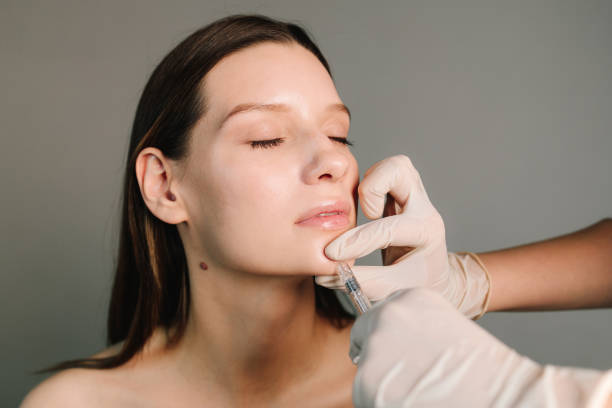
The jawline is one of the strongest visual anchors of the face. It frames the lower third, controls the side profile, and affects how youthful or structured the face appears. A defined jaw can create confidence, soften the need for makeup sculpting, and enhance angles even without posing.
However, jawlines are not all shaped the same. Some lack definition naturally. Others soften with age through volume loss or skin laxity. Some appear wide due to muscle tension while others appear narrow. This is why the discussion of botox vs filler matters because these two injectables do not achieve the same result or serve the same purpose. The right outcome depends on proper assessment and treatment design.
Jawline Contouring with Filler: Structure, Definition, Profile
Dermal filler is most often associated with volume, but in the jawline its purpose is typically structure. Instead of inflating tissue, filler in this area can create lines, edges, and contour. It can project or widen the jaw, sharpen angles, or build a more defined border along the mandible.
Filler is often selected in jawline contouring when the goal is:
Sharpening or defining a soft jaw
Adding structure where bone support is lacking
Creating a stronger lower-face silhouette
Enhancing side-profile definition
Building symmetry or proportion
In this case, filler works because structure is needed, not reduction. A non-surgical treatment like this supports the facial frame without invasive measures or extended downtime.
Jawline Contouring with Botox: Slimming, Softening, Relaxing
Unlike filler, Botox does not add shape or projection. Instead, it works on muscle movement. In the jawline, Botox is commonly used to relax the masseter muscle, the muscle responsible for clenching, grinding, or facial bulk.
Botox is chosen when contouring requires reduction rather than building. A strong or overactive jaw muscle can make the lower face look wide or square. When the muscle relaxes over time, the lower face can appear slimmer and more tapered.
Botox is often more suitable when the goal is:
Softening jaw bulk from clenching or grinding
Slimming the lower face for a more V-shaped silhouette
Reducing tension without adding structure
Refining facial angles through muscle relaxation
This is the core difference in the Botox vs filler discussion filler adds support while Botox modifies movement and muscle mass.
The Key Difference: One Builds, One Softens
Many patients consider jawline contouring a single procedure. In practice, it is two separate paths depending on what the jaw needs to build or refine. The easiest way to choose between the two is to answer one core question:
Do you want more structure or less width?
If your jaw appears small, soft, or lacking support, filler may be the right direction.
If your jaw feels wide, strong, or bulky, Botox may create the slimmer angle you want.
If you want both definition and tapering, a combination approach may be appropriate.
The right answer is not universal. It is anatomical, individualized, and guided by an experienced injector.
When the Best Result Comes from Using Both
Some jawlines need volume enhancement and muscle refinement. Structure and slimming are not opposites, they can work together. This combined method is often chosen for those who want a leaner jaw but also desire more sculpted edges, shadow lines, or lower-face contour.
In combination:
Botox refines width and relaxes heaviness
Filler builds the jaw’s edge, border, or projection
The result is a more balanced jawline contour with improved definition and a smoother transition into the neck and chin. A surgical jawline is not always necessary when foundational support and muscle harmony can be achieved non-invasively.
Choosing the Right Treatment: What to Consider
1. What is your natural jaw shape?
A softer jaw may respond better to structural enhancement, while a wide jaw may benefit from muscle relaxation.
2. What is your goal: sharpen or slim?
Filler defines, Botox refines. Each is effective when matched correctly to intention.
3. Do you want a full transformation or subtle correction?
Jawline contouring is customizable with minimal refinement and dramatic profile changes are both possible through non-surgical design.
4. What will look balanced across your entire face?
Jawline definition should complement cheek structure, chin projection, and profile ratio. The goal is harmony, not a single feature.
The Appeal of a Non-Surgical Jawline
Jaw enhancement no longer begins in an operating room. A non-surgical jawline approach allows for refinement without significant downtime, without general anesthesia, and without the commitment of permanent alteration. It offers flexibility. It allows for strategy, reassessment, and long-term planning aligned with natural aging.
For those seeking contour without incision, this is a modern pathway to structure and shape one designed thoughtfully rather than aggressively. Non-surgical does not mean small results. With the right injector, non-surgical means precise.
Understanding Expectations and Outcomes
Jawline contouring is not about transformation for the sake of change. It is about alignment, proportion, and creating shape that complements the rest of the face. The best outcome is often subtle to others but significant to the person wearing it. The jaw no longer feels undefined. The face appears more structured. Profile becomes cleaner. Shape feels intentional.
Whether filler or Botox is right for you depends not on trend, but on anatomy and goal. A consultation determines which direction builds balance naturally and sustainably. Book your consultation today to receive a personalized plan designed around you, not trends.
Final Thought: Definition Comes from Strategy, Not Guesswork
Choosing Botox vs filler for jawline contouring is not about preference. It is about matching the right tool to the right structure. Some jawlines require support. Others require relaxation. Some benefit most from both.
The future of lower-face enhancement is not volume alone. It is design, analysis, foundation, and proportion. A non-surgical jawline can look clean, sculpted, refined, or softly tapered when chosen intentionally not by assumption, but with an expert eye.
At POUTx, balanced beauty is built with purpose, not chance. Every jawline plan is guided by anatomy, intention, and expertise, never trends or shortcuts. This is where structure meets strategy, and enhancement feels natural, refined, and uniquely yours.